
The fashion industry has allowed the infiltration of a network exploiting young girls from East African countries such as South Sudan and Somalia vulnerable and defenseless, merely seeking survival after lives marked by war and political instability
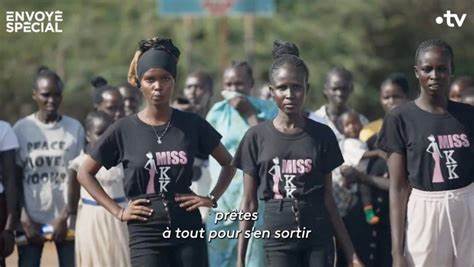

In this French documentary about the recruitment of models in refugee camps, we discover the story of thousands of women whose slender height and Grace Jones-like features are perceived as their only spark of hope. Most of these young girls have never known a stable life or the possibility of supporting themselves. They see in the dream of Fashion Week not just an opportunity, but a priceless chance to finally live and take care of their loved ones.
But reality is far more cruel. The fashion industry does not welcome them with open arms it scrutinizes them, analyzing every detail to determine whether they can make the designer clothes shine. This dream begins with scouting in a context of political instability and extreme financial precarity. Most have grown up or were even born in refugee camps like Kakuma, in northwestern Kenya. They all come from countries marked by severe famine and chronic political insecurity, which led them to seek refuge in these camps and try to tame a necessary peace, just to be able to embrace life.
They are thirsty for an escape, and it’s precisely this longing that the scouts perceive. These business-minded talent scouts exploit that thirst for life, selling them the promise of a new existence: one filled with spotlights, runways, and camera flashes. Their beauty would be admired, their silhouettes monetized, their futures reinvented. For these girls who have only ever known survival, the dream becomes an ideal path a near-miraculous way out.
But this quest for another life breeds blind trust. This dream, because it is the only one offered to them, becomes their sole hope. So they accept the recruitment conditions, believing with all their heart that this new beginning will give meaning to their lives and a future to their families. They arrive in Europe to attend castings, hoping that those first fifteen days will be enough to win over the industry. But if, at the end of that period, they are not selected, they must return. And with them, an entire dream of social ascension collapses crushed by a fashion world that is as ruthless as it is competitive, where empathy is non-existent.
The violence is twofold. First, it is psychological. Facing their own failures and disappointments reinforces their belief that they are worthless. Despite having that Grace Jones morphology, they cannot hide their shame. They are forced to confront it upon returning, leaving them emotionally unmoored some even driven to suicide to avoid surviving with the added trauma of an emotional roller coaster that took them from joy to hope, then to disappointment and disillusionment. These young girls already leave with almost no self-worth. The joy stirred by this dream is the only form of validation they’ve ever known. And when that dream is taken away, they are brutally thrown back into another kind of violence: economic violence. They return in debt, forced to find a quick almost vital way to repay the cost of this illusion.
They live in a constant state of survival. It is the only consistency they’ve ever known: a life marked by insecurity and instability. This context deeply weakens them, making them easy prey and silent victims always on the edge, at the mercy of a world that gives them no break.
The cruelty of this recruitment process and the disregard for who they are women who have never even had the chance to embrace their dignity shows how the consequences of armed conflict and political instability automatically render women vulnerable. This conditions them to accept a life of pure survival, never having the opportunity to realize they are more than that more than refugees, but women who have the right to seek the stability of a dignified life.
So, you may ask me: how can femininity help? Rethinking femininity for these women is, above all, a matter of perspective. No one has ever told them that they are human beings in their own right beyond the refugee label. And yet, they are. Embracing and questioning how femininity can serve them is, first and foremost, about becoming fully aware of their own existence restoring space for their being in a world that forgets they have the right to exist, first and foremost, for themselves. It’s the opportunity to walk a path where they choose to appreciate themselves through small daily gestures of well-being something essential to every human being.
What if, in the end, femininity wasn’t a weakness, but a tool for healing? A way to exist fully, to reclaim the gaze upon oneself, and to rise not in silence, but in the awareness of one’s worth. Because it’s no longer just about surviving in a world that refuses to see them: it’s about seeing themselves, at last, and recognizing that they are full subjects in their own right. What if the power you hold lives in your femininity?

 Sunshine Empowerment
Laisser un commentaire