
Intellectual legitimacy, often reserved for men, can become a tool of insidious violence: that of contempt. Behind criticism that purports to be objective lies a system that disqualifies anything that falls outside its codes.

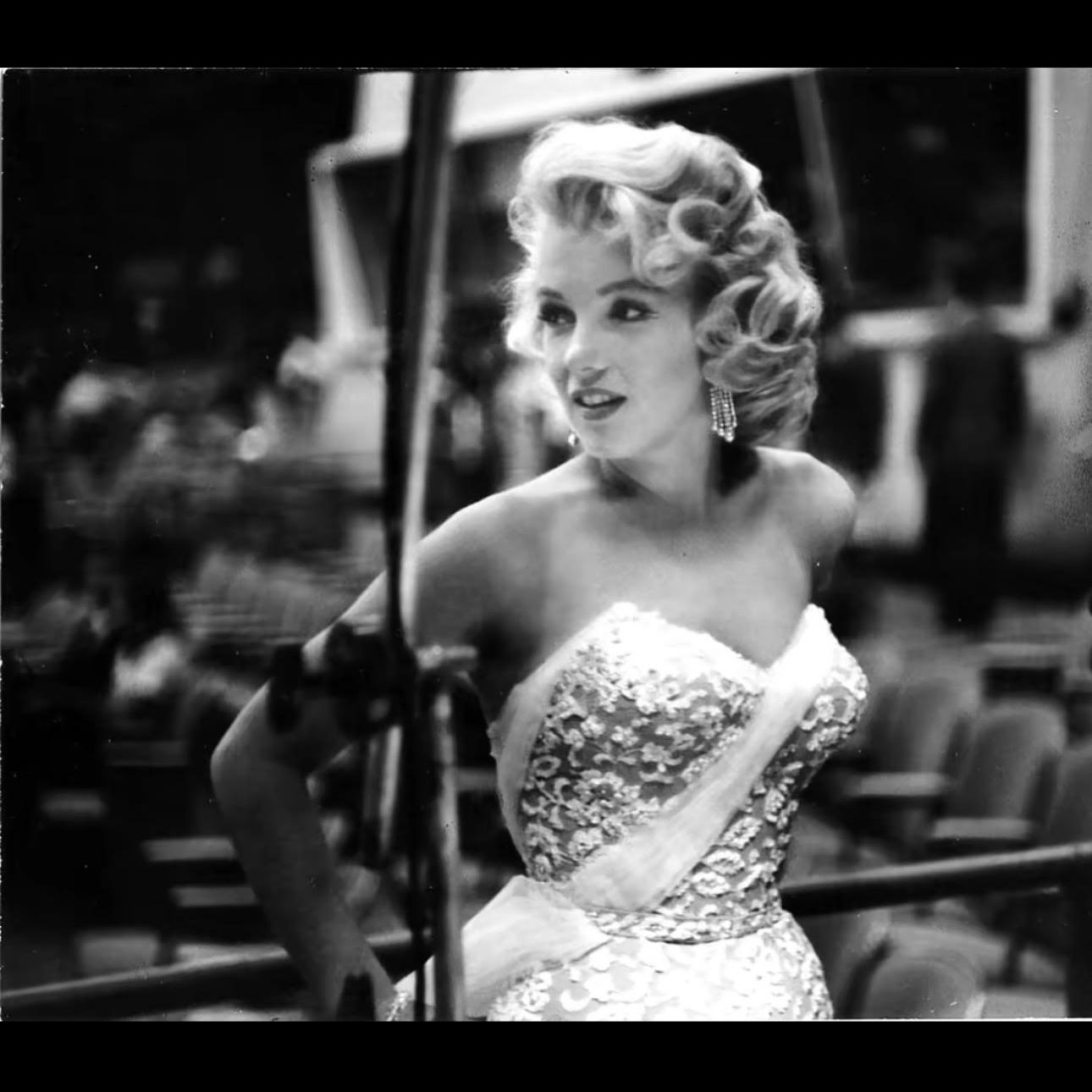

A man’s intellectual legitimacy allows him to engage in reasoning that guarantees contempt and reduction of a force that is unknown to him or simply beyond his grasp. And that is literally what James Elroy decided to do when he chose to use his position and status as a respected writer to despise and insult a woman whose talent and magnetism transcended decades and established a social impact that was sometimes deeper and more lasting than that of certain great politicians.
Marilyn Monroe is a woman who built an empire and became a symbol of voluptuous and sexy femininity, a social vision of women that was very unaccepted and predominant in the validated and framed perception of women at a time when the majority of them, far from the world of Hollywood, barely had the right to express their real desires.
Marilyn Monroe built a career as an actress starting from the bottom, with no family, financial capital or social connections. But she quickly understood that physical appearance was a form of language, that the way a woman carries herself, speaks or simply exists in a room can change the way people perceive her.
This reading of silent social dynamics is an invisible but unstoppable weapon, especially in the field of cinema, which revolves around perception and visuals, and which she dreamed of being a part of. So she worked on herself, both internally and externally, step by step, to reveal the most magnetic and hypnotic version of herself. And this is the ability to understand and neutralise the way in which the environment in which one wants to evolve is structured and to draw on the layers of the deeply patriarchal system for one’s own purposes.
She did not simply work on herself and her physical appearance, but she embarked on a process of personal development in order to establish herself in the very spheres she had always dreamed of. This is the ability to understand and neutralise the structure of the environment in which one wishes to evolve, and to exploit the layers of the deeply patriarchal system for one’s own purposes.
She did not simply work on herself and her physical appearance, but she embarked on a process of personal development in order to establish herself in the very spheres she had always dreamed of. This may seem totally superficial, but in reality the process is not scientific and does not follow a linear reasoning, as it is an object analysed outside of time and space. It is the ability to know oneself, work on oneself and follow a personal journey and development that combines skills (professional assets) and qualities (human assets).
When James Ellroy asserts that she was bland, mediocre and superficial without having known her first-hand, he is not simply criticising a woman who succeeded and built her wealth on the basis of knowledge and qualities from a field that is less scientific or considered less serious in terms of prevailing codes. He is denying the idea of any intellectual reasoning in Marilyn Monroe’s career and works. Thus, he reinforces the idea that her physical appearance was not simply an expression of her identity, but simply a means of being socially validated as desirable. She then becomes a female archetype whose purpose is to please the male gaze.
What Ellroy reveals is a deep-seated distrust of hyperfemininity. When it is not seeking validation from the male intellectual world, hyperfemininity is viewed with suspicion, deemed empty and manipulative. In certain male-dominated intellectual cultures, it is unthinkable that ‘frivolous’ language makeup, glamour, seduction could have a profound impact.
This rejection goes beyond aesthetics. It is political: it refuses to accept that forms of symbolic, soft, performative power can exist outside the traditional codes of domination or authority.
It is a rather subtle way of diminishing the achievements of a woman who has had such a significant social impact, as if her physical appearance were not already an expression of her charisma and her ability to use femininity and aesthetics to express a fundamental part of her identity, using a strategy that is much gentler but nonetheless powerful.
Marilyn Monroe understood that controlling one’s self-perception was a power, but also a means of asserting a unique part of who we are. And in this way, she shone, but she burned her wings. Yes, she suffered, she was used by men, because inevitably, when a woman wants to express so much radiance in a world designed and built by men, then yes, the system must find a way to tap into that radiance, especially if it allows it to generate and amass money. And Marilyn Monroe knew how to do that just by existing, one might say, but in reality… no.
By having a perfect knowledge of herself and absolute control of her being in different social spaces, it was a strategy based on an extremely subtle but powerful social analysis of social dynamics and codes, while asserting her own signature.
What if the power you hold lives in your femininity? Marilyn Monroe understood that very well.

 Sunshine Empowerment
Laisser un commentaire